
Description
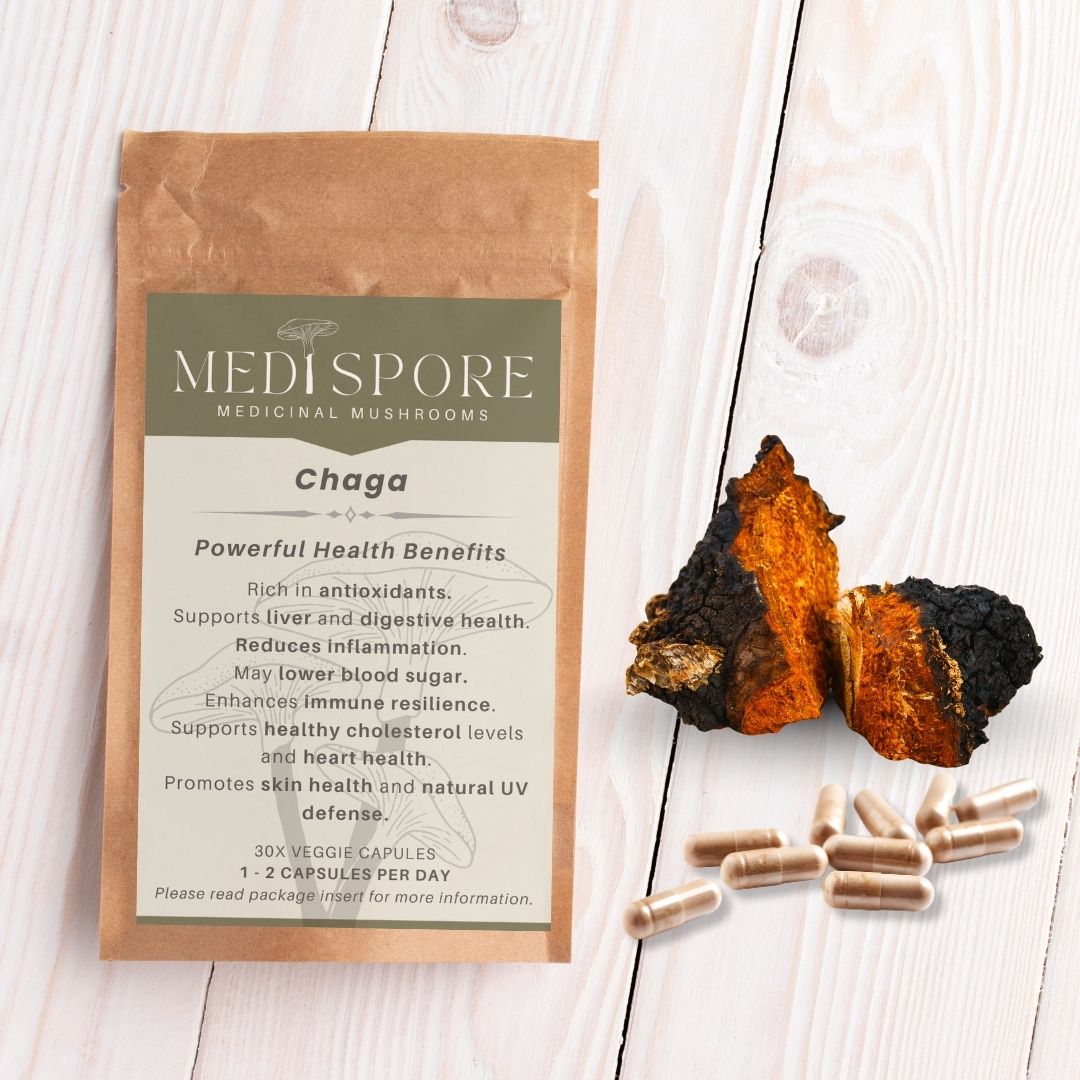
A short origin story: From Siberia to Scandinavia, birch trees carry coal-black chaga conks. In folk medicine, it was simmered into a bitter tea for winter vitality.
How It Affects Your Body: Chaga is phenolic-rich and antioxidant. The everyday claims outpace human trials, and one practical issue matters: oxalates.
Biochemical Mechanism: Polyphenols, melanins, and triterpenes (including betulinic derivatives from birch) contribute to antioxidant and anti-inflammatory actions in preclinical work. Human data are limited.
Vitamins, Minerals, and Chemical Composition: Polyphenols, β-glucans, melanin pigments, triterpenes; typical mushroom micronutrients in smaller amounts.
Recommended Dose: 2–4 capsules daily (500 mg each).
Warnings and Safety Considerations: Chaga teas and powders can be high in oxalates; cases of oxalate nephropathy have been reported. Use caution if you have a history of kidney stones or reduced kidney function. Potential interactions with anticoagulants and diabetes medications.
Long-Term Benefits of Use: Best seen as an antioxidant beverage or extract; rigorous clinical evidence is sparse. Balance possible benefits against oxalate risk.

Reviews
There are no reviews yet.