
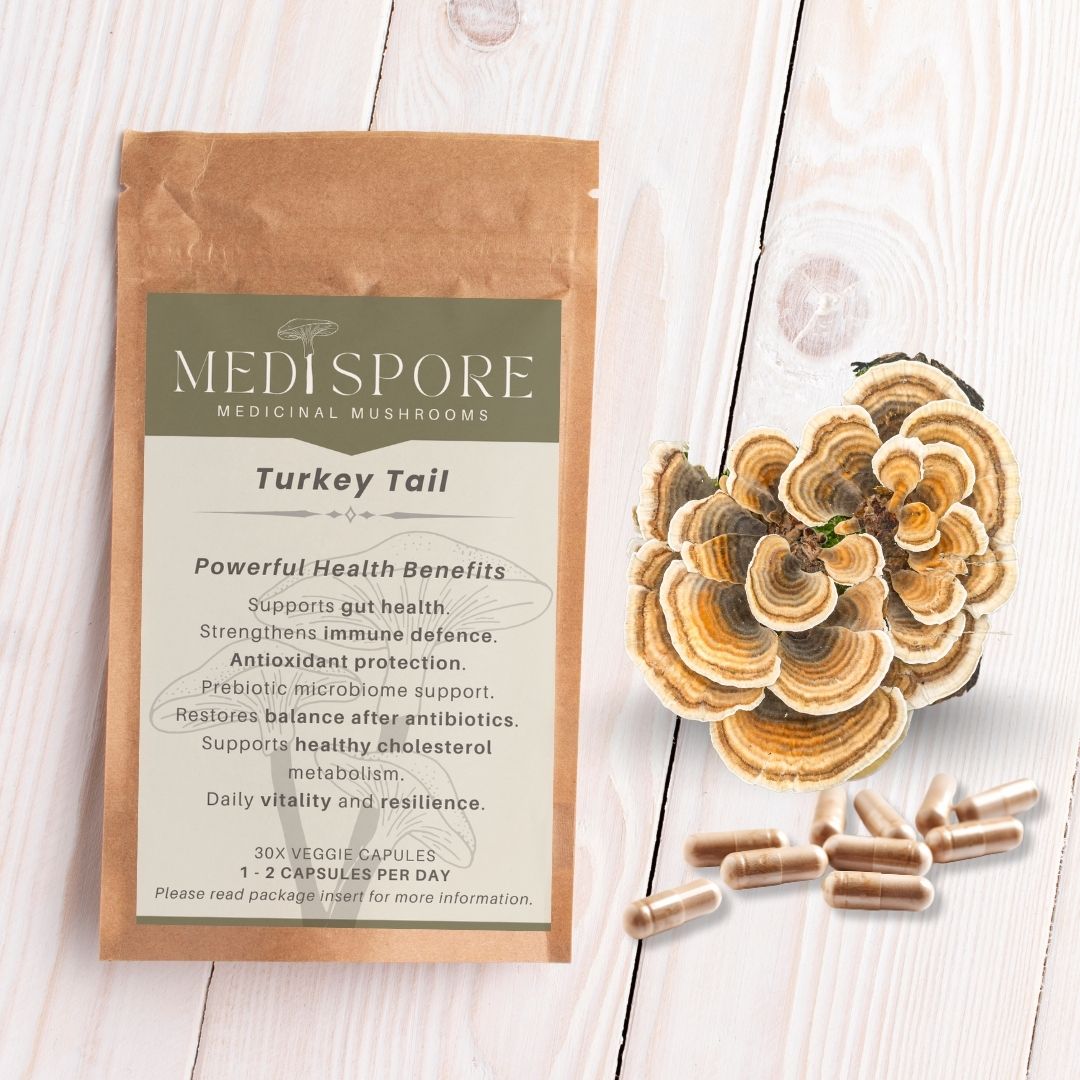
Description
A short origin story: In Japanese forests it’s kawaratake, the “roof-tile fungus,” fanning across fallen trunks. In the 1970s, a protein-bound polysaccharide from turkey tail became a standard adjunct in Japanese oncology.
How It Affects Your Body: Protein-bound polysaccharides from turkey tail, notably PSK, have been used alongside chemotherapy and radiation in Japan for decades, with data showing immune effects and survival benefits in certain settings.
Biochemical Mechanism: β-glucans and protein-bound polysaccharides (PSK/PSP) interact with immune receptors and can enhance NK and T-cell activity.
Vitamins, Minerals, and Chemical Composition: Rich in β-glucans, phenolics, and typical mushroom micronutrients (B vitamins, selenium, copper, potassium).
Recommended Dose: 2–6 capsules daily (500 mg each). If you are in cancer care, coordinate dosing with your oncology team.
Warnings and Safety Considerations: Generally well tolerated in studies; still, coordinate with your oncology team to avoid interactions and to ensure product quality.
Long-Term Benefits of Use:
As a supplement think immune tone rather than cure; strongest data pertain to regulated drug products in Japan.
Reviews
There are no reviews yet.