
Description
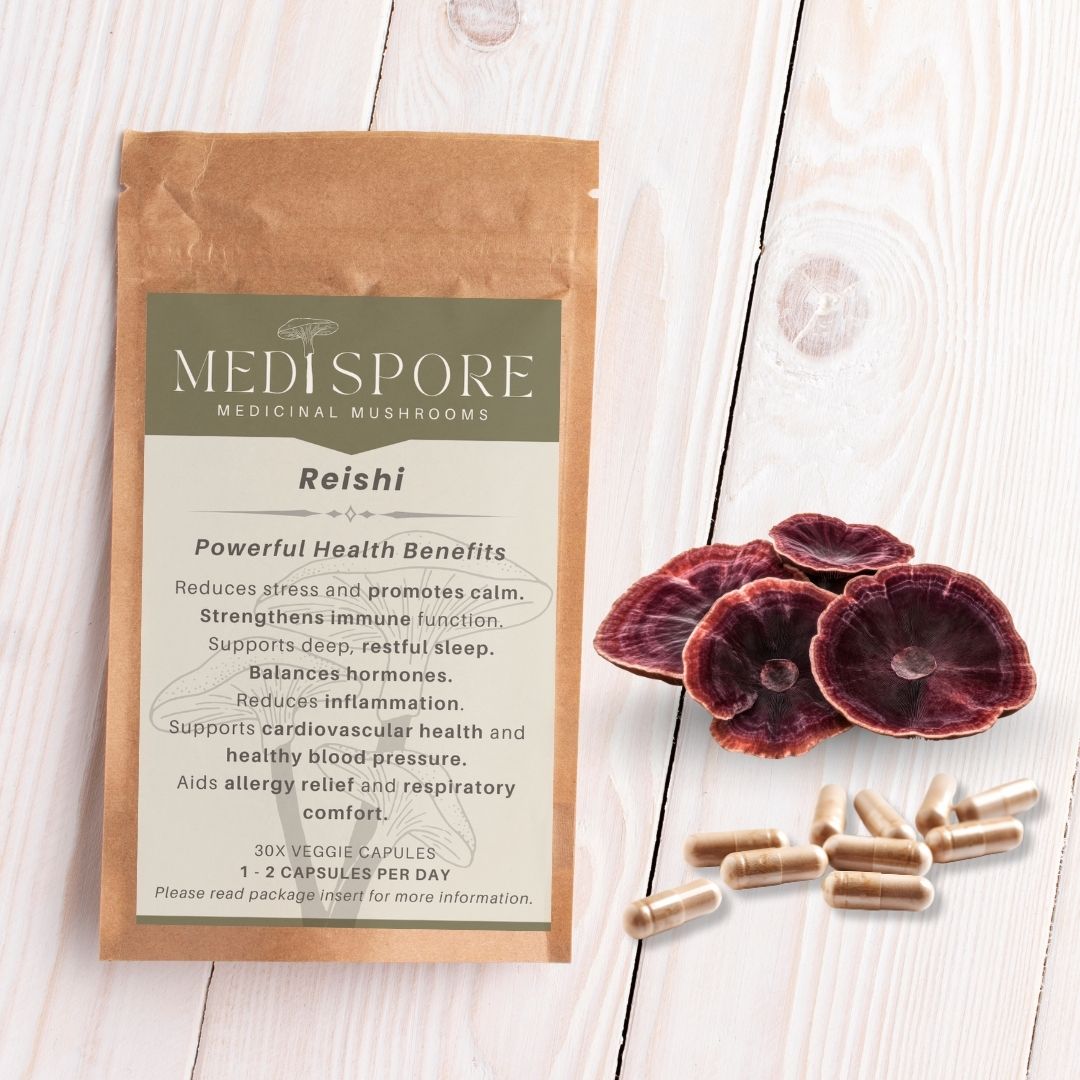
A short origin story: In old Chinese herbals, reishi is the “spirit plant” that emperors sought for vigor and long life. It favored the scars of ancient trees, lacquer-red and stubborn, a token of patience more than speed.
How It Affects Your Body: Reishi extracts tend to modulate rather than “boost” immunity. People often report steadier sleep and a softer stress response after some weeks, consistent with its adaptogenic reputation.
Biochemical Mechanism: Polysaccharides (notably β-glucans) influence innate and adaptive immune activity; triterpenoids (ganoderic acids) have anti-inflammatory and antioxidant actions. Clinical research in oncology largely studies reishi as an adjunct to conventional care, where it can affect immune markers.
Vitamins, Minerals, and Chemical Composition: Reishi supplies β-glucans, triterpenes, sterols, and typical mushroom micronutrients like B vitamins, selenium, copper, and potassium; mushrooms also provide the antioxidant ergothioneine.
Recommended Dose: 1–6 capsules daily with food (500 mg each), split morning and evening. No universal clinical dose; consistency is key.
Warnings and Safety Considerations: Rare but real liver injury has been reported with reishi products; stop use if you develop jaundice, dark urine, or right-upper-quadrant pain. Use caution with anticoagulants, antihypertensives, and diabetes drugs. Avoid in pregnancy or if you’re on immunosuppressants unless your clinician approves.
Long-Term Benefits of Use: Best framed as “stress and sleep support plus immune modulation over time,” not a cure-all. Evidence for disease prevention remains preliminary.
Reviews
There are no reviews yet.